

CASE STUDY
FirstBus
× Optimo
86
DC chargers managing 172 connectors
125kW and 150kW
Hardware
~12MW
Connected Charging Load
~6MW
Grid Connection
Single integrated energy management platform controlling all charging across the site
Integration with the existing CPMS on the B2B charging section (Part 1: 34 outlets)
The Challenge
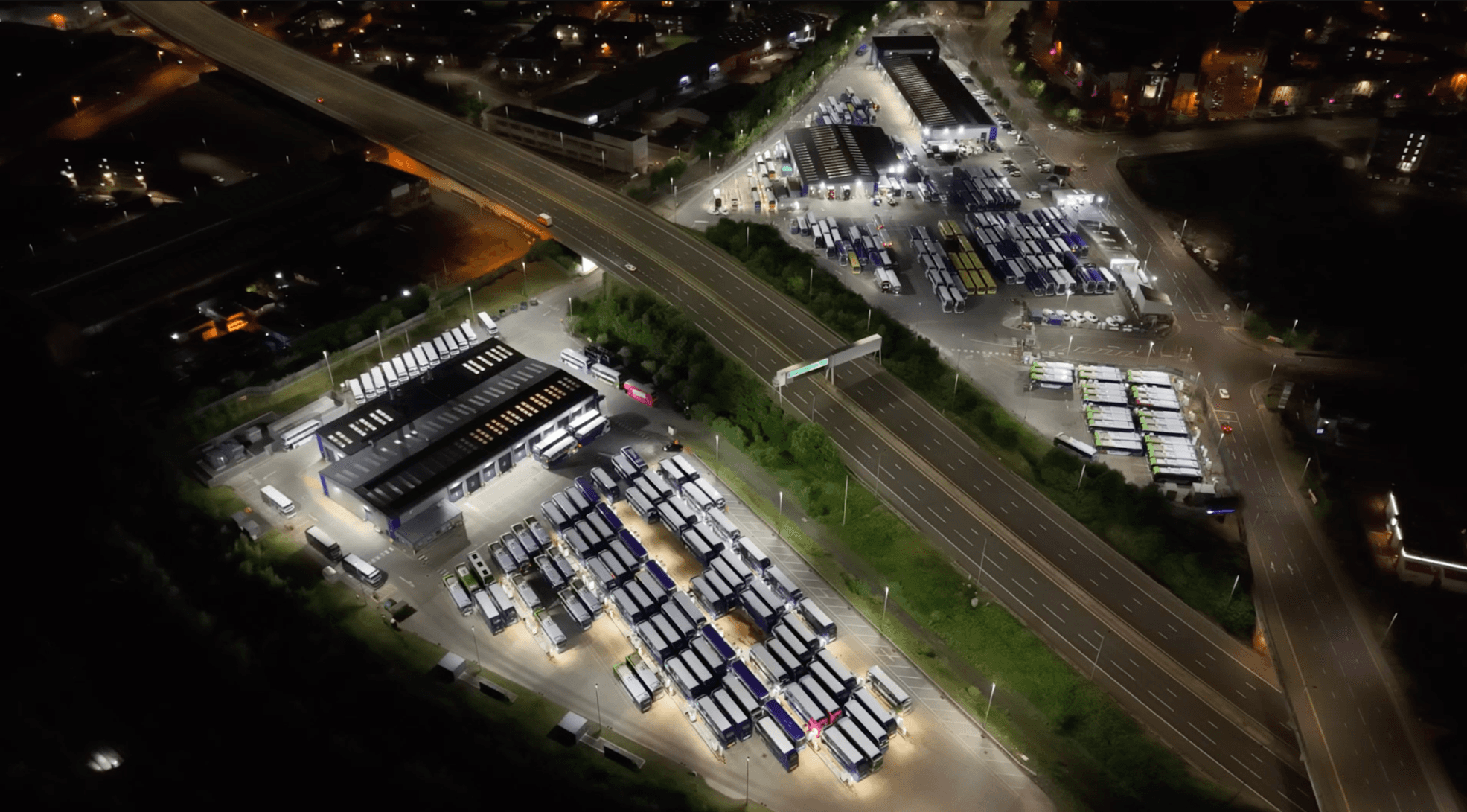
First Bus operates Caledonia Road, one of the UK's largest electric bus depots. The company had made significant investment in charging infrastructure, 86 chargers, 172 connectors, 12MW of connected load. But that infrastructure was functioning as a cost centre. Charging software managed vehicle readiness, but nothing captured the flexibility value embedded in the depot's charging patterns other than B2B and B2C charging.
The real opportunity was untapped: First Bus could unlock revenue from their existing estate by participating in energy markets and grid services. But there was a structural gap. Their existing CPMS managed the operational side (ensuring buses were charged and ready). The energy markets and flexibility trading platforms operated in a separate silo. No bridge connected operational reality to market access.
First Bus needed an Energy Operating System that could sit between their CPMS and the flexibility markets, translating depot operations into tradeable flexibility without compromising vehicle readiness.

The Solution
Optimo Energy is an Energy Operating System purpose-built for electric fleet depots. For part 1 of the trial, Optimo sits as a transparent integration layer on top of First Bus's existing charging management system (CPMS), adding energy optimisation and flexibility trading without touching charger firmware or operational workflows. The platform bridges the gap between depot operations and energy market access, turning infrastructure from a cost centre into a revenue-generating asset.
Why the Approach Matters
Most flexibility platforms aggregate assets from multiple depots and operators, treating them as abstract collections to be optimised remotely. Optimo operates depots. We prioritise the depot as a mission-critical fleet operation first, ensuring vehicle readiness, managing grid constraints in real time, and coordinating across all site infrastructure. Only the flexibility that remains after those operational requirements are met enters the energy market. This alignment of incentives is fundamental: both the operator and Optimo win only when the buses go out on time.
First Bus already had a working CPMS managing B2B and B2C charging authorisation across the chargers in Part 1 of the trial. That system was business-critical; pulling it out was not an option. But to unlock energy flexibility and trading revenue, they needed new capability on top of it. Optimo sat transparently on top of the existing CPMS, adding energy optimisation and flexibility trading without touching the authorisation layer. First Bus kept business continuity on charging access control whilst trialling the Optimo platform. No system replacement. No operational risk. No retraining.
When First Bus expanded to Part 2, bringing the remaining 138 connectors online across the full site, Optimo operated as the Energy Operating System for those chargers. Today, Caledonia Road runs both models simultaneously: Part 1 continues to operate in seamless collaboration with the existing CPMS, managing B2B charging authorisation whilst Optimo optimises energy; Part 2 demonstrates Optimo's ability to operate independently as the sole Energy Operating System. This dual deployment at a single site proves the architectural flexibility: Optimo works seamlessly alongside existing CPMS platforms where they exist, or operates independently where they don't.
Part 1: The B2B Pilot
We began with the B2B charging section of Caledonia Road, deploying across 34 charging outlets. This portion of the site already had an existing CPMS in place. Optimo integrated with it seamlessly, sitting as a transparent layer on top without replacing or disrupting the existing system. We tested and trailed the full model in this controlled environment.
Rollout Timeline: Part 1
Live system in days. Value in weeks. Revenue in months.
Day 1: Initial chargers live. Two chargers deployed with system monitoring and contingency testing.
Day 2: 50% live. Half the B2B site running, full monitoring active, load management optimisation underway.
Day 3: Fully operational. All B2B charger groups live, full site section under management with no disruption to operations.
Week 3: Value begins. Energy cost reduction starts to make measurable financial impact.
Week 5: Flexibility trading enabled. Balancing Mechanism access goes live, unlocking participation in grid services revenue.
The Greenlight for Part 2
The success of Part 1 was unambiguous. Full vehicle readiness was maintained, energy cost reductions were measurable, and flexibility trading was generating revenue. The existing CPMS continued to function without any compromise. After approximately four months of continuous operational proof, First Bus greenlit the extension to the complete site.
Isabel McAllister, Chief Sustainability Officer at First Bus, said:
"We've made a significant investment in the infrastructure at Caledonia and across our electric depots, so we want to make sure we're using that infrastructure as intelligently as possible. One of the biggest challenges we have faced is making sure we have enough energy to provide a reliable service for customers while also continuing to provide surplus energy to the grid. Optimo bridges those worlds for us."
Part 2: Full-Site Rollout
Following the success of Part 1, First Bus gave Optimo the green light to extend the platform across the complete Caledonia Road depot.
Within 48 hours, the entire site was live.
The original 34 charging outlets from Part 1 remained fully operational and continued participating in live grid services while the Optimo team systematically brought the remaining 138 connectors onto the platform.
Because we already understood the site's chargers, infrastructure and operational requirements from Part 1, we were able to scale rapidly without disrupting service or interrupting the flexibility trading already generating revenue.
The result was a seamless expansion from 34 to 172 charging outlets, bringing the complete Caledonia Road charging estate under integrated Optimo management.
172 connectors. ~12MW of connected charging load. ~6MW grid connection. Zero operational downtime. All within 48 hours.
“We're delighted to be expanding our work with First Bus at Caledonia following the success of the initial trial. This next phase is an important opportunity to demonstrate at scale that energy flexibility and the operational demands of a major electric fleet can go hand in hand.
Working closely with the First Bus team, we're showing how intelligent management of charging can protect vehicle readiness while unlocking greater value from existing energy and charging infrastructure. We believe this approach has significant potential as electric fleets continue to grow.”
Daniel Homoki-FarkasCEO & Co-founder, Optimo Energy

What We Proved at Scale
Caledonia Road demonstrated that energy flexibility and operational readiness are not competing priorities. They are complementary. By deploying Optimo's platform across the complete 172 charging outlets, First Bus proved:
100% vehicle pull-out assured. Every bus pulled out on schedule, every day, across the entire site.
Full-site integration with zero downtime. Mixed 125kW and 150kW hardware managed simultaneously by a single platform. Live grid services revenue continued uninterrupted during the expansion.
Seamless integration with existing CPMS on the B2B charging section. No operational risk. Existing CPMS systems retained full authorisation for third party charging; Optimo added energy and power management on top without disruption.
Real-time orchestration across the constrained 6MW grid connection. Demand forecasting shaped around departure schedules; charging shifted to lowest-cost windows; flexibility automatically traded into the Balancing Mechanism.
Proactive fault detection. Worked with OEM partner to resolve hardware issues remotely before dispatch was affected.
Energy cost reduction from Week 3. Dynamic tariff optimisation delivered measurable savings to First Bus.
Flexibility trading activated in Week 5. Balancing mechanism revenue began accruing immediately and continued across the full-site rollout.
Proven Technical Architecture
Caledonia Road demonstrated every major Optimo capability simultaneously in live production. This is Optimo's standard approach, applicable to any depot, any fleet type, any scale.
OCPP Proxy: Non-invasive proxy layer sitting transparently between chargers and the existing CPMS, giving Optimo full energy and power management without touching charger firmware.
Energy Control: Hardware-agnostic, config-driven, repeatable across any OCPP 1.6+ depot.
Flexibility Trading Enabled: Real-time integration with grid services markets and balancing mechanisms.
Modular and Scalable: Same architecture deployed identically across Caledonia Road works seamlessly with existing back-office systems, CPMS platforms, telematics providers, and route planning tools. That modularity means unlimited extensibility as electric bus, HGV, and commercial eLCV depots continue to grow.
Unlocking Material Value from Existing Infrastructure
By participating in the Balancing Mechanism and wholesale energy trading, First Bus is now accessing material revenue from its existing Caledonia infrastructure. The Balancing Mechanism is the UK National Grid service that compensates operators for shifting flexible demand during supply/demand imbalances, unlocking revenue from flexibility that's already embedded in charging schedules. This value comes from flexibility the depot already has. It simply wasn't being captured before.
Vehicle readiness remains the absolute priority. Once buses' operational requirements are secured, the remaining charging flexibility is optimised for energy market revenue.
Why This Matters
This is a proven, repeatable deployment. Caledonia Road is still in active trial, but the model has demonstrated its viability at scale. Most fleet operators choose between two things: keeping buses charged and ready, or accessing the financial upside of energy flexibility. Caledonia Road proved the choice is false. With the right architecture, you maintain 100% vehicle readiness whilst unlocking material value from the same infrastructure. The platform works with existing systems, deploys in days without operational disruption, and begins generating returns in weeks.
Rollout Beyond Caledonia
Following the success at Caledonia Road, Optimo is conducting a pilot programme at First Bus's Great Yarmouth depot, now fully operational. Great Yarmouth extends the approach beyond chargers alone, orchestrating multiple energy assets behind the meter: stationary battery storage from Pelion Energy, solar PV, and EV chargers. The platform ensures buses are ready on time whilst optimising energy use across all assets, demonstrating how to transform an EV depot from a traditional cost centre into a revenue-generating asset through integrated asset orchestration.
This model is now available for all Optimo customers operating electric fleets, irrespective of vehicle type-buses, HGVs, or light commercial vehicles.
this Company
About First Bus
First Bus operates more than 1,500 zero-emission buses, approximately a quarter of its total fleet, and has committed to operating a fully zero-emission commercial bus fleet by 2035. The company has developed 20 electric depots across the UK, with several more due to be completed by the end of 2026. The project builds on First Bus' wider investment in electrification and its strategy to derive greater value from its growing electric depot estate. Caledonia Road is one of the UK's largest bus depots and serves as the proof point for how energy management and operational readiness work together at scale.

© Copyright Optimo Energy Limited. All Rights Reserved.