

CASE STUDY
Warrington's Own Buses
× Optimo
Fleet
105 Volvo BZL electric buses. 68 routes. 6 million passengers per year
Scale
85% of Warrington's entire bus network
Chargers
52 ABB Terra 124 - 104 connectors
Previous Provider
EO Charging - entered administration April 2026
Award to go-live
Under 48 hours
Contract Term
5 years
What We Proved
100% fleet readiness every morning since go-live, not one departure missed due to charging failure
104 connectors fully onboarded in under 48 hours from contract award
Zero overnight charging capacity lost at any point during transition
No hardware replacement, existing estate fully utilised via native OCPP integration
One transparent price per connector per month, full platform, monitoring and O&M, no hidden costs
Flexibility trading opportunity unlocked, depots of WOB's scale can generate between £35,000–£50,000 per MW per year from capacity that already exists

The Problem
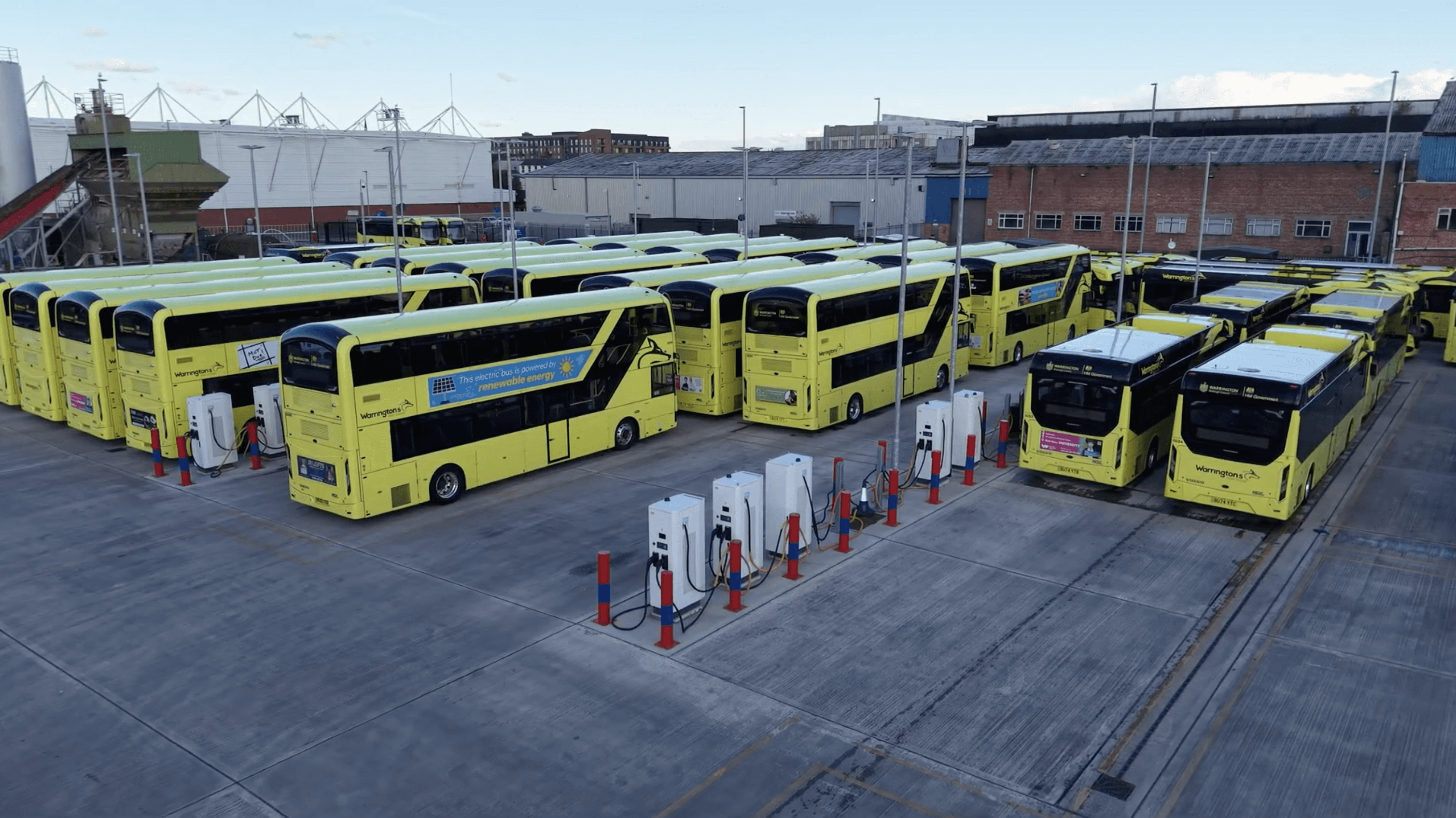
Warrington's Own Buses carries 6 million passengers a year across 85% of a town's entire bus network. Every journey depends on a 100% electric fleet charged overnight. When EO Charging entered administration in April 2026, WOB's charging platform ceased. Without an immediate replacement, buses don't depart. A town loses its public transport.
WOB needed complete, immediate control of its charging infrastructure, platform, maintenance, and grid management, without disrupting a single overnight charging cycle and with no residual dependency on a collapsed provider's systems.
The site made this harder. Four transformer circuits. A timed 6MVA/2MVA grid connection. Dynamic building load. A live mid-transition between metering arrangements. 52 chargers inherited with no handover documentation and no OCPP continuity. Hardware replacement was not an option. The solution had to work with the existing estate, from day one.

The Deployment
The original plan was phased across three days. On 21 April, with Tx1 stable and the platform performing, the decision was taken to accelerate. The full site was onboarded in a single day. Not one overnight charging cycle was disrupted throughout.
16 April – Proposal Submitted
17 April – Contract awarded
20 April – Mobilisation begins - Tx1 live on Optimo
21 April – Full site accelerated in a single day – all 104 connectors live
The WOB site is exactly the kind of complex, constrained environment Optimo was built for. Four transformer circuits, a timed grid connection, a mid-transition metering arrangement - and 100% fleet readiness from day one. The platform doesn't care about borders. Wherever fleets charge, Optimo can manage them.
– Daniel Homoki-Farkas, Co-Founder & CEO, Optimo Energy

How we de-risked the rollout
Live system in days. Value in weeks. Revenue in months.
No interface risk. Amphos and Optimo operate under a single Commercial Grade Assurance framework - one contract, one escalation path, hardware and software managed as one solution. Not two suppliers pointing at each other.
We already knew the site. All three consortium members had worked within EO Charging. Optimo had validated OCPP interoperability on-site before the contract was signed. No discovery lag. No configuration surprises. Control was established from the first charger onboarded.
Hardware failure is covered before it happens. Amphos holds units in spare parts inventory. Faulty components are replaced immediately - no manufacturer lead times, no extended downtime. Direct OEM relationship with ABB means escalation goes to the front of the queue.
Proven at scale before WOB. Optimo delivered 100% fleet readiness at First Bus Caledonia Road - grid-constrained, live in two days. WOB is the continuation of a proven pattern, not an experiment.
The Technical Solution
Dynamic Load Management & Grid Control
Optimo replaced static load sharing with fully dynamic real-time optimisation across all four transformer limits simultaneously. Charging schedules prioritise every vehicle by individual departure time. Every kilowatt of WOB's existing connection is put to work. No breaches. No manual intervention. No infrastructure upgrades. WOB didn't need more grid capacity - it needed intelligent control of what it already had. First time WOB saw over 4MW.
Fleet Visibility & Telemetry
Through native Volvo telemetry integration, Optimo tracks every vehicle's state of charge continuously - on the road, not only when plugged in. Operations teams see whether overnight schedules need adjusting, whether any vehicle risks missing its departure requirement before it arrives back. The operational view runs from the moment a bus leaves the depot to the moment it returns.
24/7/365 Technical Operations Centre
Staffed around the clock, measured on one metric: fleet readiness. ML anomaly detection runs continuously across all 104 connectors, resolving the majority of faults autonomously. Where physical attendance is needed, Amphos is dispatched with full diagnostics already prepared. By the time a fault would previously have been reported by a driver, Optimo has already detected it, acted on it, and in most cases closed it.
What’s Next
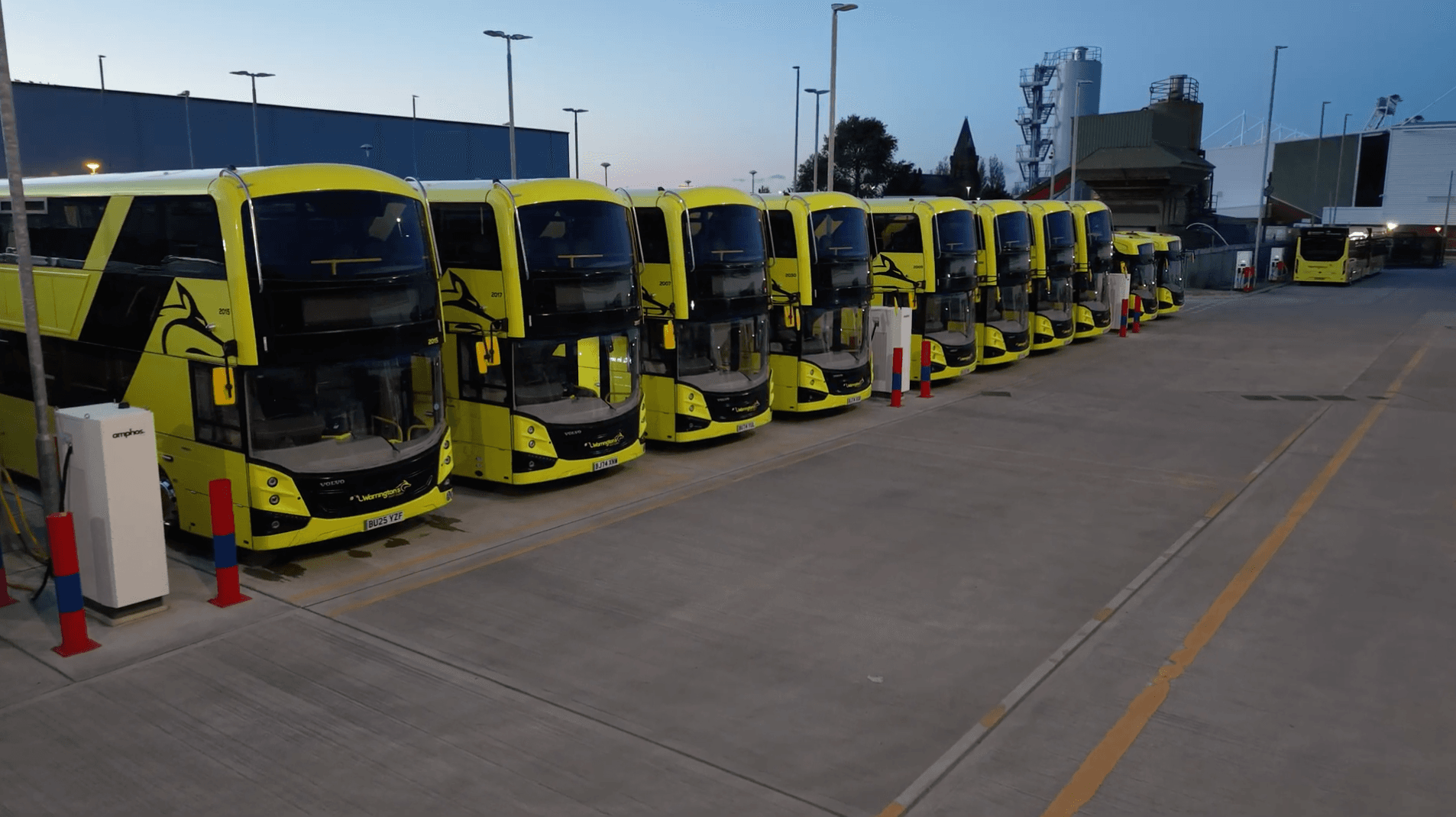
Fleet readiness is the foundation - not the ceiling. With operational control established, WOB can now move into flexibility trading, generating between £35,000 and £50,000 per MW per year from charging capacity that already exists and is already paid for. No new infrastructure. No additional capital expenditure. No operational risk to fleet readiness. The platform is ready. The revenue opportunity is already sitting in the depot. The same is true for every operator running an electric fleet tonight.
this Company
About Warrington's Own Buses

© Copyright Optimo Energy Limited. All Rights Reserved.