
The 10 Questions Every Fleet Operator Should Ask Before Choosing a Charging Platform
Ten questions every fleet operator should ask when choosing EV charging software, from vehicle readiness and load management to market access.

Mohomoud Ismail, Global Director of Sales, Optimo Energy
|
mo.ismail@optimoenergy.io
Choosing a fleet charging platform can look simple. Can it connect to the chargers? Does it have a dashboard? Can it start and stop sessions? Those are useful questions. They are not enough for a depot where dozens or hundreds of vehicles depend on the system every day.
Here are ten questions we think matter more.
Does the platform understand vehicles, or only chargers?
A fleet system should know which vehicle is connected, what energy it needs and when it has to leave.
What happens when charger demand exceeds the grid connection?
At scale, this is normal. The platform should actively manage demand within site constraints.
How is power prioritised?
Equal distribution is not always the right answer. Operational urgency should matter.
What happens when the plan changes?
Vehicles return late. State of charge differs. Routes change. Charging control should adapt in real time.
Can the platform work across different charger manufacturers?
Fleet estates evolve. Software should not unnecessarily lock every future hardware decision.
Can it integrate vehicle telemetry and route information?
The more operational context the platform understands, the better the charging decision can be.
Can it coordinate solar and battery storage?
Modern depots are becoming energy systems. Chargers should not be optimised in isolation.
Who watches the operation overnight?
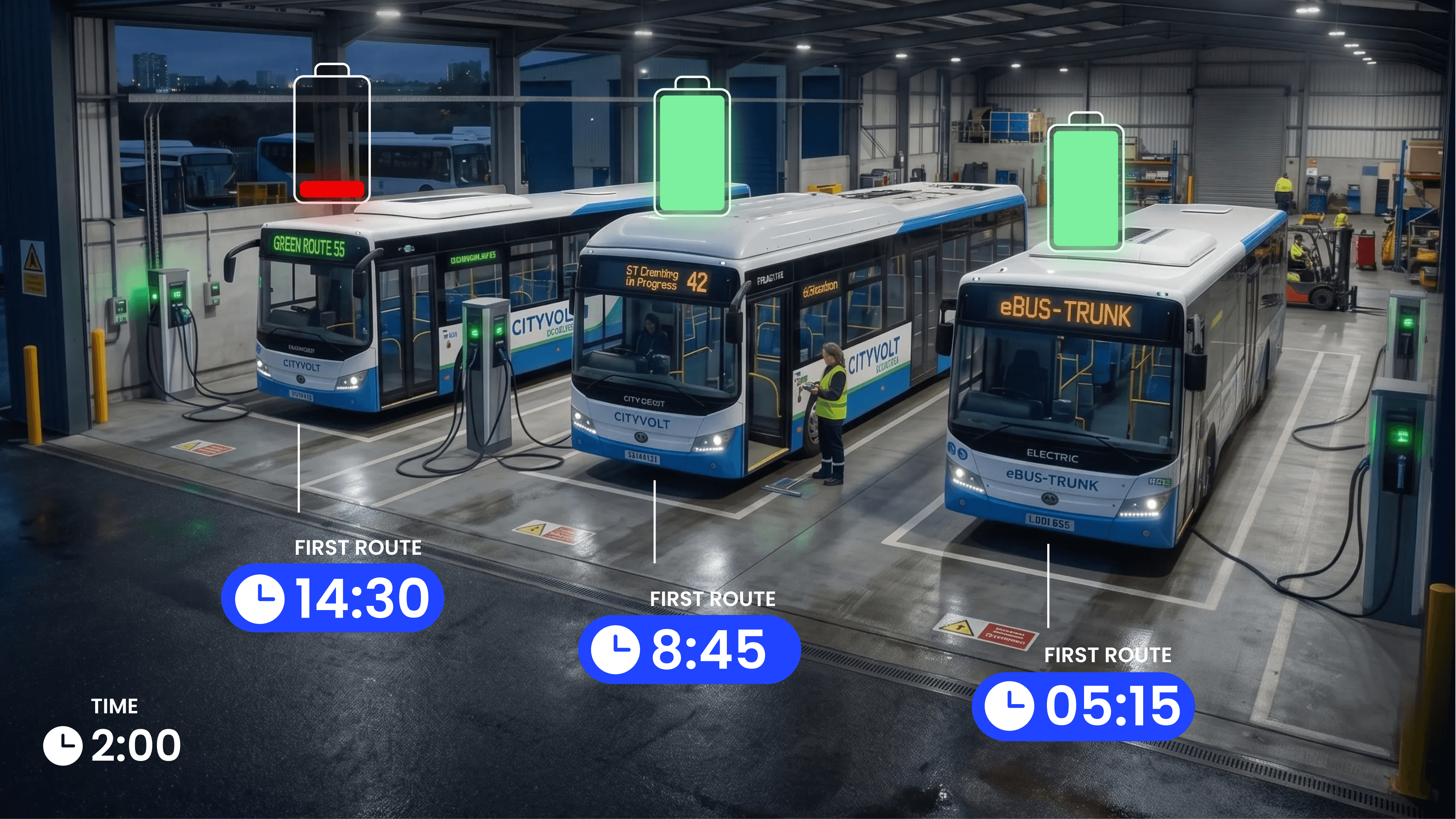
Understand what happens at 02:00 when a charger stops delivering power to a vehicle leaving at 05:00.
Can the platform help us get more from existing infrastructure?
Ask how it manages grid constraints, charger utilisation and the power-to-plug ratio.
If flexibility revenue is part of the proposition, who actually takes the load to market?
Who identifies the flexibility? Who controls the chargers? How is readiness protected? How is revenue calculated and shared? These questions reveal the difference between a charger-management tool and a fleet operating platform. The final test is even simpler. Ask the supplier to explain what happens on the worst night. Several vehicles return late. One charger faults. The grid connection is constrained. A high-priority vehicle needs more energy than expected.
A flexibility event is available. What does the system do? The answer will tell you whether the platform was built around chargers or around the fleet. Behind all ten questions is one bigger question: does the platform understand the fleet operation, or only the chargers? The Fleet Energy Operating System is built around the former.


© Copyright Optimo Energy Limited. All Rights Reserved.