How Optimo Actually Works: From Fleet Data to an Adaptive Operating Loop
A technical look at how Optimo combines CPMS control, fleet forecasting, microgrid orchestration and energy trading to continuously optimise an electric depot.
Written by:

Mohomoud Ismail, Global Director of Sales, Optimo Energy
|
mo.ismail@optimoenergy.io

“Fine. But what is Optimo actually doing?” It is one of the best questions a fleet operator can ask. The simple answer is that Optimo continuously turns live fleet, charging and energy data into a new operating decision. At a high level, the optimisation cycle is refreshed on a recurring optimisation cycle, while critical control and monitoring functions operate at the speed required by the underlying infrastructure. Start with control
Optimo begins with its fleet-grade CPMS. That is the infrastructure layer: charger connectivity, real-time control, sessions, monitoring, diagnostics, remote intervention and visibility across the charging estate. Without dependable charger control, optimisation is only a recommendation. Optimo needs the ability to act. Then understand the fleet
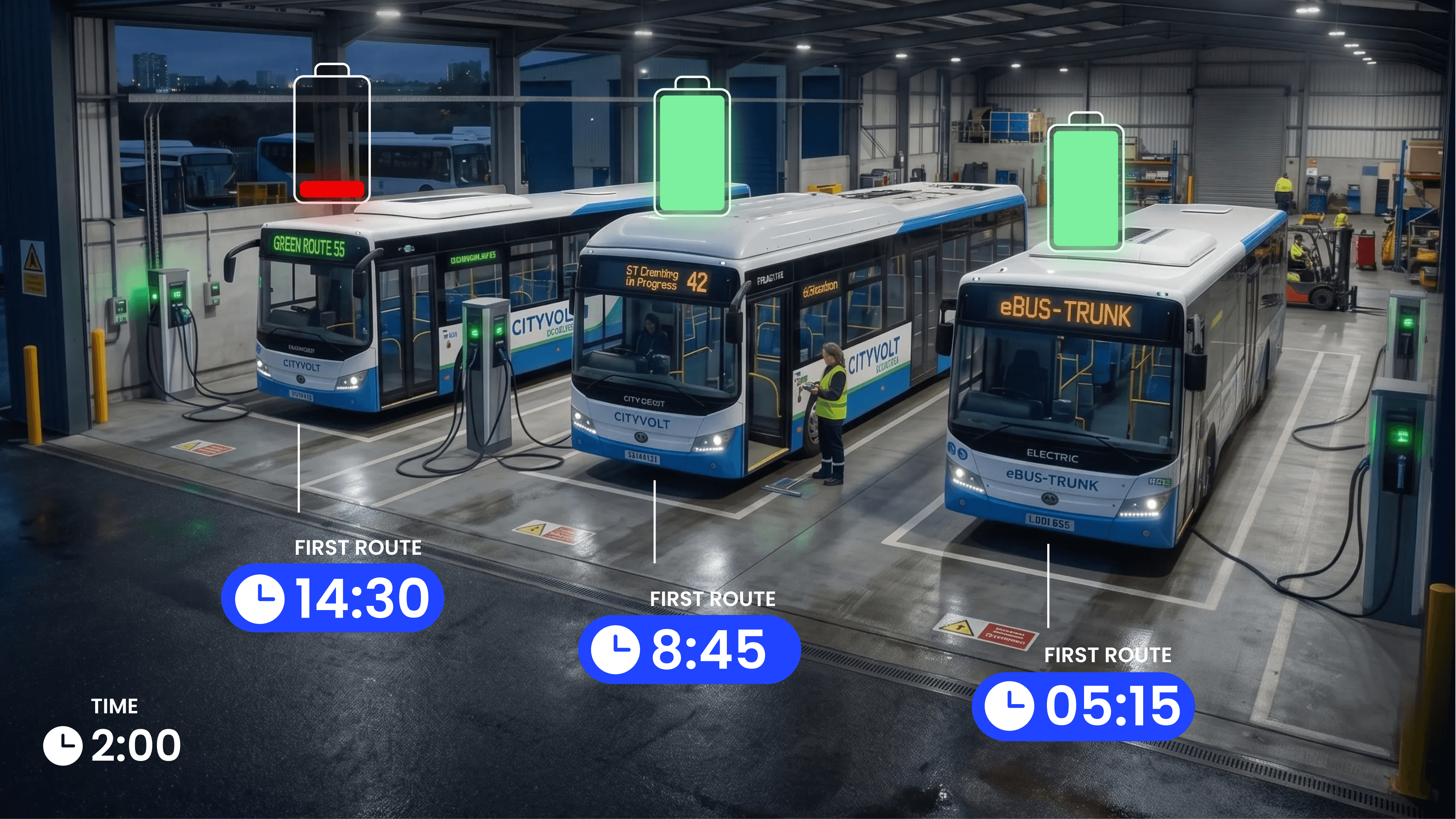
The charging requirement does not come from the charger. It comes from the vehicle operation. Optimo can combine vehicle schedules, allocation, live telematics, state of charge, route forecasts and expected energy consumption to build a view of what each vehicle actually needs. A vehicle leaving early with a low state of charge has a different priority from one that is already sufficiently charged and has several hours before its next duty.
This is the forecasting layer behind Optimodel: turn the operating plan into an energy requirement. Then understand the electrical system The next question is what the depot can safely deliver. Optimo’s Microgrid Controller monitors the site’s electrical position, including grid load, local depot demand, charging infrastructure and, where integrated, solar and battery storage. It respects the physical limits of the connection, transformers, feeders and other site constraints.
That means the system is not simply deciding how much energy vehicles want. It is reconciling that demand with how much power is available, where it is available and when it can be used. On a recurring optimisation cycle, build the best plan again Optimo then produces an optimised charging schedule around the fleet requirement and the site constraint.
The plan can consider operational priority, energy cost, available solar, battery behaviour and the amount of spare charging flexibility. Five minutes later, the world may have changed. A vehicle arrives late. Another arrives with more state of charge than forecast. Building load increases. Solar generation falls. A charger stops delivering power. A route allocation changes. An energy-market opportunity appears.
Optimo does not need the original plan to remain correct. It builds the best plan from the latest position. Flexibility comes last Once required vehicle energy is protected, the remaining charging window can become flexible. Optimo can calculate how much demand can safely increase, decrease or move without creating a readiness risk.
Where the site is technically and commercially qualified, that flexibility can then be used in energy markets. Qualification, aggregation, bidding, dispatch and settlement can sit behind the same operating layer rather than being disconnected from the vehicles. That sequence matters. A market signal never gets to overrule a vehicle requirement. One system, not four hand-offs
Traditional depot architecture can split the job between a CPMS, fleet-management system, EMS and aggregator. Each system can be good at its own task and the overall result can still be poor because the hand-offs are where context is lost. Optimo’s architecture is designed to close that gap: CPMS control at the foundation, Optimodel forecasting the requirement, the Microgrid Controller orchestrating the physical energy assets, and Energy Trading monetising only the flexibility left after the fleet is protected.
That is what Optimo is doing on a recurring optimisation cycle: asking what the fleet needs now, what the depot can safely deliver now, and what the best use of the remaining energy opportunity is now. Energy is our currency. Fleet readiness determines how it can be spent.
Found this insightful?
Share on LinkedIn
More from Optimo
Insight
How Optimo Actually Works: From Fleet Data to an Adaptive Operating Loop
A technical look at how Optimo combines CPMS control, fleet forecasting, microgrid orchestration and energy trading to continuously optimise an electric depot.
Read More >
Insight
What Happens When Something Goes Wrong at 2am?
What happens when charging goes wrong overnight, and why early detection, remote intervention and 24/7 support protect morning dispatch.
Read More >

Insight
The 10 Questions Every Fleet Operator Should Ask Before Choosing a Charging Platform
Ten questions every fleet operator should ask when choosing EV charging software, from vehicle readiness and load management to market access.
Read More >
© Copyright Optimo Energy Limited. All Rights Reserved.