
From charging buses to managing energy: What First Bus's Caledonia depot tells us about the future of electric fleets
Discover how Optimo Energy connects fleet charging, energy management and flexibility at First Bus's Caledonia depot in Glasgow.

Mohomoud Ismail, Global Director of Sales, Optimo Energy
|
mo.ismail@optimoenergy.io
When a bus operator invests in electric vehicles and charging infrastructure, the immediate priority is straightforward: make sure every bus has enough energy to complete its scheduled duties.
But as fleets grow, the challenge becomes more complex. Operators must manage increasing charging demand, limited grid capacity and the cost of the energy required to keep their vehicles moving.
What if that same charging infrastructure could do more than keep vehicles on the road?
At First Bus's Caledonia depot in Glasgow, that question is becoming an important part of how the operator manages its energy.
Following a successful initial trial, First Bus has expanded Optimo Energy's technology from 34 to 172 charging outlets across the depot. Earlier this year, First Bus became the first UK bus operator to enrol an electric depot in the National Grid balancing mechanism, opening up opportunities to participate in energy flexibility markets.
The expansion demonstrates how charging operations, energy management and flexibility can work together within one integrated system, with fleet readiness remaining the overriding priority.
The challenge isn't simply how much power you have
Caledonia has a potential charging load of 12MW operating within a 5MW grid connection.
That creates an important distinction between the total power the charging infrastructure could demand and the electricity available to the site at any given time.
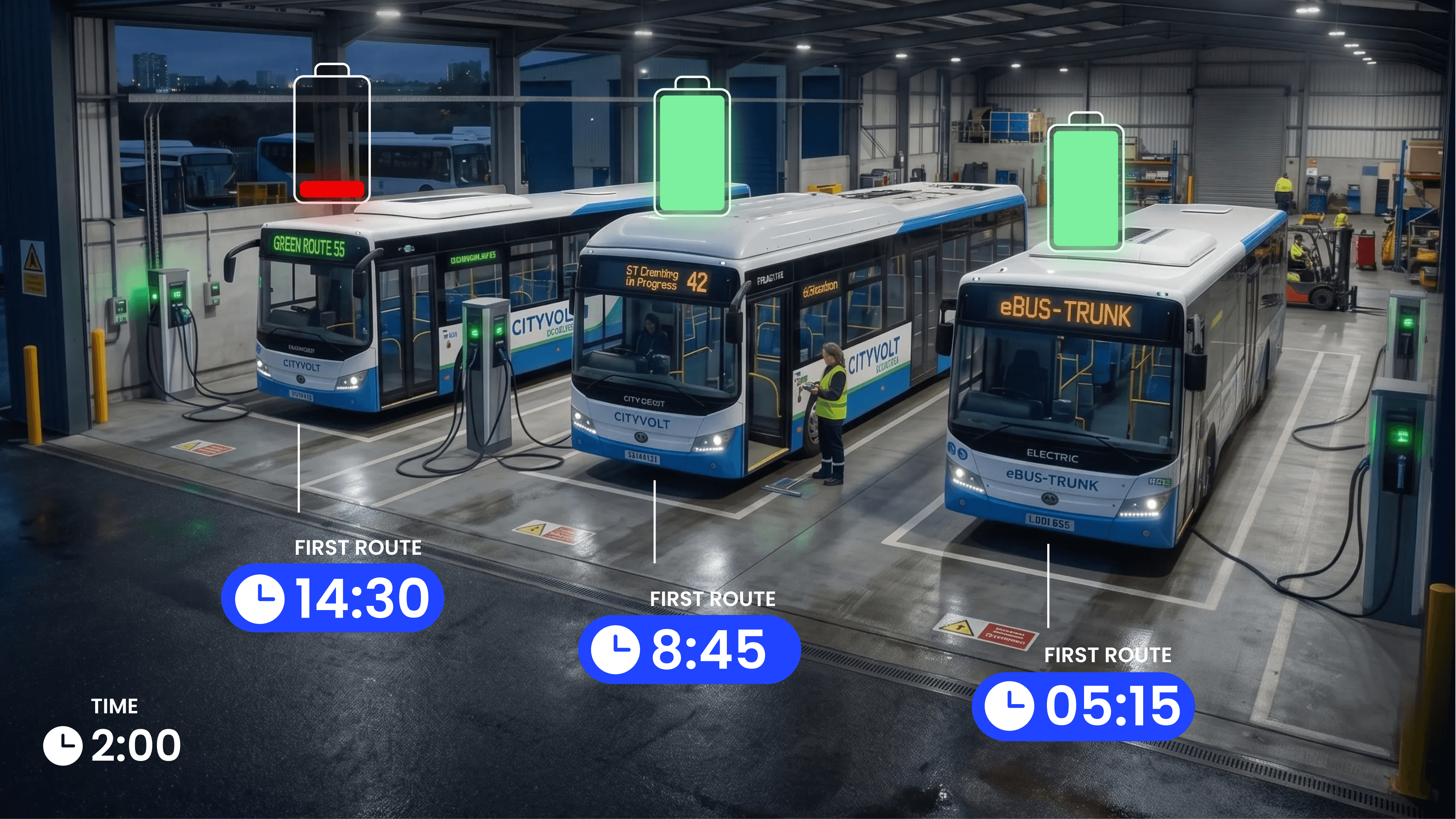
Not every bus needs to charge simultaneously, and not every vehicle requires the same amount of energy or has the same departure time.
A bus returning to the depot early in the evening may have several hours before its next scheduled duty. Another arriving later may need to depart much sooner.
Treating both vehicles identically would fail to account for their different operational requirements.
The challenge is therefore not simply distributing the available power equally across the depot. It is understanding which vehicles need energy, how much they need and when they need it.
That is where intelligent energy management becomes essential.
One platform connecting fleet operations and energy management
Optimo's Fleet Energy Operating System brings charging operations, energy management and flexibility together in one platform.
At Caledonia, the platform forecasts vehicle energy requirements and dynamically manages when buses charge, coordinating the available grid capacity with the operational needs of the fleet.
This creates a more informed approach to charging than simply supplying power whenever a vehicle is plugged in.
Charging demand can be managed around vehicle requirements, allowing the depot to make better use of its available energy while keeping fleet readiness at the centre of every decision.
The distinction matters because the objective is not to minimise electricity consumption at the expense of the service. It is to ensure vehicles receive the energy they need while making the best possible use of the infrastructure already in place.
When charging demand becomes an energy asset
Once the operational requirements of the fleet are secured, the remaining flexibility in charging demand creates another opportunity.
Some charging can be brought forward or delayed without affecting when a vehicle needs to be ready for service.
That flexibility has value beyond the depot.
Electricity supply and demand must remain balanced across the grid. At times, renewable generation may be abundant, while at others, demand on the electricity system may be particularly high.
At Caledonia, Optimo's technology enables First Bus to increase charging when excess renewable energy is available, particularly wind power in Scotland, and reduce demand during peak periods.
The platform also enables First Bus to access energy flexibility markets, creating a potential new revenue stream from its existing depot infrastructure.
The important point is that energy flexibility is not treated as a separate activity competing with the requirements of the fleet.
It is managed alongside charging operations, using the flexibility available after vehicle requirements have been accounted for.
This changes how operators can think about their charging infrastructure. An asset originally installed to power vehicles can also provide value to the wider electricity system.
What this means for the next generation of electric fleets
The lessons from Caledonia extend beyond electric buses.
Electric heavy goods vehicles, light commercial vehicles and other operationally critical fleets face similar questions as they electrify.
How much power will their vehicles need? When must they be ready? Can the existing grid connection support a growing fleet? And what additional value could be created from charging demand that can be adjusted without disrupting operations?
These questions cannot be answered by looking at chargers, vehicles or electricity prices in isolation.
They require an integrated understanding of fleet operations and energy.
At Caledonia, the expansion from 34 to 172 charging outlets shows how First Bus is applying this approach across a major electric depot.
For Optimo, it demonstrates the opportunity to move beyond managing chargers towards managing the energy that powers an entire fleet.
Protect operations first. Make better use of the energy available. Then unlock additional value from the infrastructure already in place.
That is what a Fleet Energy Operating System is designed to deliver.
Read the original First Bus announcement (https://news.firstbus.co.uk/news/first-bus-expands-uk-first-energy-trial-across-major-glasgow-depot) to learn more about the Caledonia expansion.

© Copyright Optimo Energy Limited. All Rights Reserved.