
How Much Grid Capacity Does an Electric Fleet Depot Actually Need?
A practical guide to sizing grid capacity for an electric fleet depot using vehicle energy, dwell windows, diversity, transformers, building load, solar and BESS.

Mohomoud Ismail, Global Director of Sales, Optimo Energy
|
mo.ismail@optimoenergy.io
Add up the maximum power of every charger and you can calculate the theoretical charging capacity of a depot. You have not calculated the grid capacity the fleet actually needs. That difference can be worth millions in infrastructure decisions.
Start with energy, not charger nameplates
The first number is the energy the vehicles need to complete their duties. For each vehicle, estimate daily consumption, expected return state of charge, required departure state of charge and operational contingency. Then ask when that energy has to be delivered.
A fleet requiring 20MWh overnight has a very different grid requirement if it has ten hours to charge than if most of the energy has to be delivered inside a three-hour turnaround.
Diversity is the reason charger MW and grid MW diverge
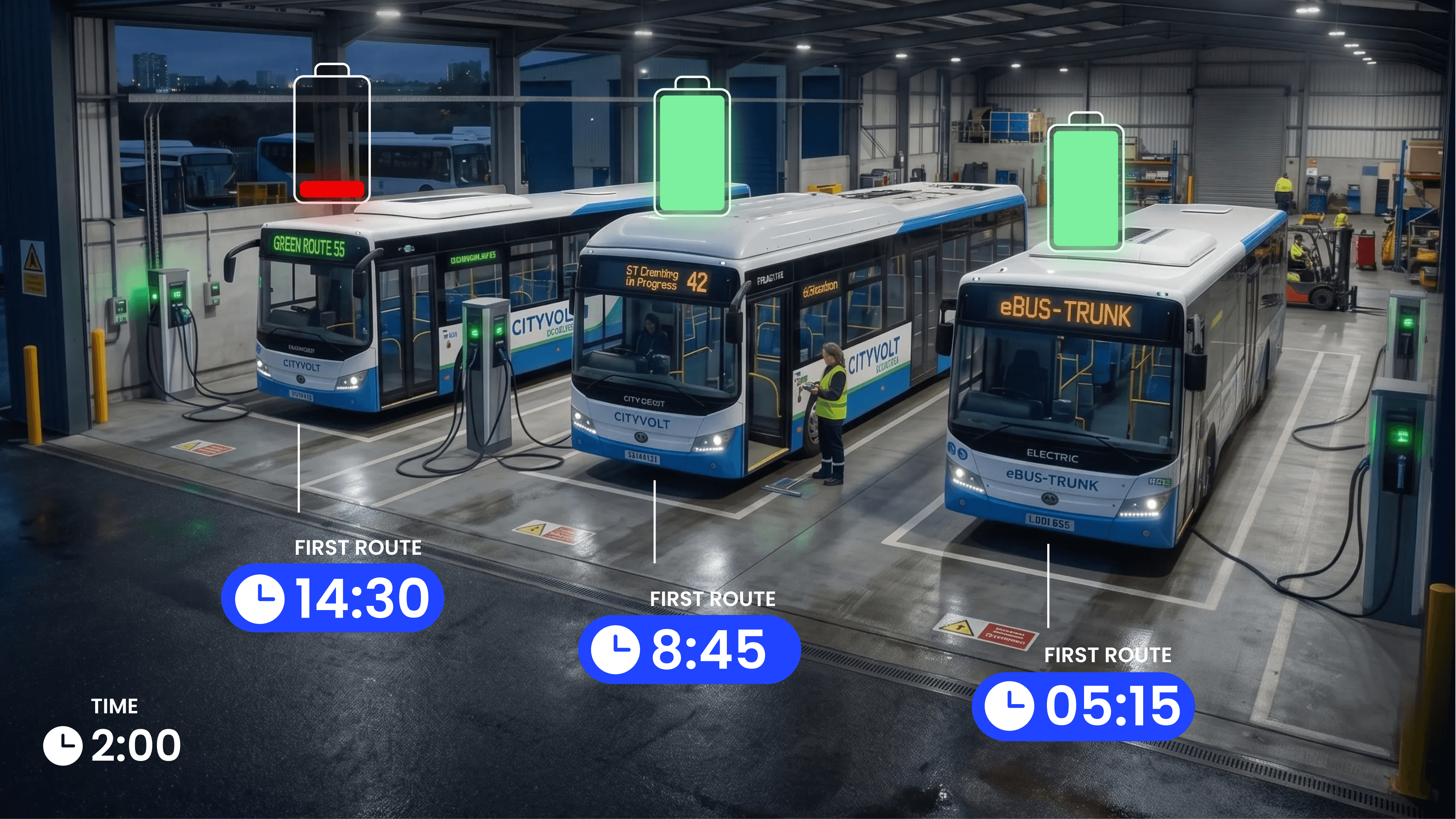
Not every vehicle arrives at the same time. Not every battery is equally empty. Not every vehicle leaves at the same time. Not every charger needs to run at full power continuously. Those differences create diversity in the load.
At First Bus Caledonia Road, the charging estate has up to 12MW of potential charging demand behind a 5MW grid connection. The site works because the fleet’s real energy requirement is orchestrated over time rather than every outlet being treated as simultaneous maximum demand.
Installed charging capacity is not the same as required grid capacity. Model the electrical hierarchy
The grid connection is only one constraint. A depot may have several transformers, feeder limits and local distribution constraints. Building demand may share the same supply. Solar may reduce net import at some times. A BESS may shift power between periods.
A good grid-capacity model therefore needs to know not only the total MW available, but where that power can physically flow.
Include the bad night
Sizing only for the average night is risky. What happens when vehicles return late? When energy consumption is higher than forecast? When one charger is unavailable? When a vehicle is swapped onto an earlier duty? When building load is unusually high?
The model should include operational margin and credible failure scenarios. Fleet readiness is the hard constraint.
Before buying more grid, test the control strategy
Some depots genuinely need a larger connection. Software cannot create physical capacity that is not there.
But Warrington’s Own Buses demonstrates why the operator should first ask whether the existing capacity is being used intelligently. Optimo increased available charging power from approximately 3.5MW to 4.3MW on the same grid connection and charging hardware by managing the site’s constraints dynamically. That does not remove the need for future upgrades. It helps make sure capital is spent because the fleet needs it, not because static charging logic wastes what is already available.
A practical sizing sequence
Model vehicle energy by duty. Overlay arrival and departure windows. Apply realistic charger capability and availability. Map transformer and feeder constraints. Add building load. Model solar and BESS where relevant. Stress-test operational exceptions. Then simulate the charging schedule and identify the true peak import requirement. Finally, repeat the model for the fleet you expect in three, five and ten years. The answer is rarely a single ratio that applies to every depot.
The right grid connection is the one that supports the fleet’s real energy requirement with the right resilience, while allowing software to make intelligent use of every available kilowatt. Get more from the infrastructure you already own, then build what the operation genuinely needs.


© Copyright Optimo Energy Limited. All Rights Reserved.