What Happens When Something Goes Wrong at 2am?
What happens when charging goes wrong overnight, and why early detection, remote intervention and 24/7 support protect morning dispatch.
Written by:

Mohomoud Ismail, Global Director of Sales, Optimo Energy
|
mo.ismail@optimoenergy.io
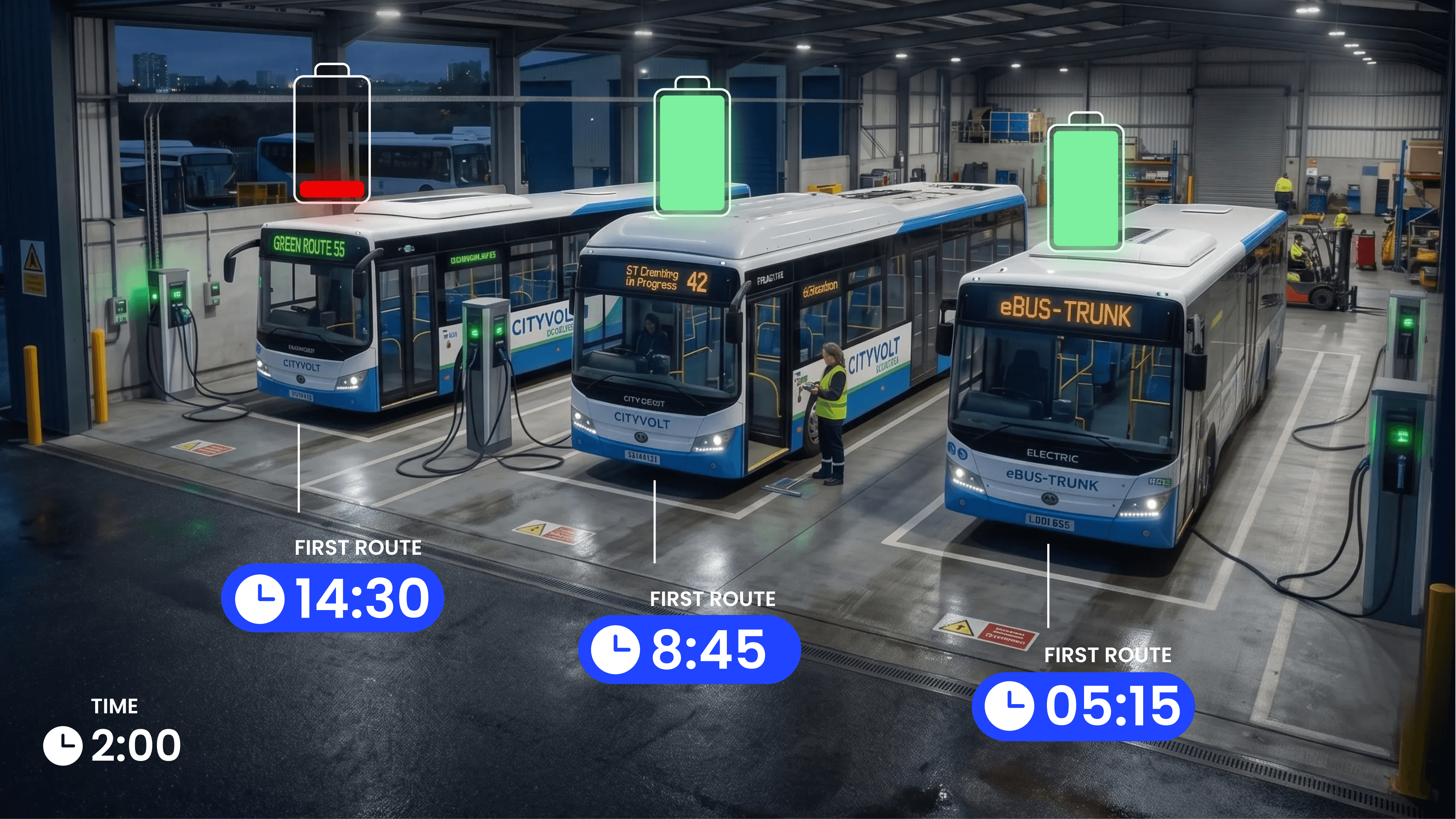
At 2am, a charger stops delivering power. The depot is quiet. The bus connected to it leaves at 05:20. There are two ways this story can end. In the first, nobody notices until the morning team arrives. The charger is investigated. The vehicle is not ready. Operations now has a problem. In the second, the issue is detected while there is still time to do something about it. That difference is what operational support is really for. Fleet charging support should not begin with a ticket.
It should begin with understanding the consequences. Which vehicle is affected? How much energy does it still need? When does it leave? Is another charger available? Can the session be restarted remotely? Can power be reprioritised? Is an engineer actually required? The earlier those questions are answered, the more recovery options remain. Optimo’s 24/7/365 monitoring and control capability is designed around that reality. The objective is not to generate more alarms.
It is to turn infrastructure events into operational decisions. A communication drop may require observation. A repeated power failure on a vehicle with an imminent departure may require immediate intervention. The same technical event can have very different priority depending on the fleet context.
Remote intervention is important because many charging issues do not require a person to travel to site. A restart, configuration change or session recovery may be enough. Where a physical issue does require engineering support, the platform can provide better information for the O&M partner. What happened? When? How often? Which asset? What was the operational consequence? That creates a cleaner escalation path. It also changes the relationship between software and support.
The platform should not simply tell the operator something is broken. It should help protect the operation while the issue is being resolved. This is why 24/7/365 matters. Electric fleet depots do not only consume energy during office hours. The most critical charging window is often overnight. The system protecting that operation has to work on the same timetable. At 2am, the operator should not need another dashboard. It needs time. Early detection creates it.
The real test of charging software is not the dashboard at 2pm. It is what happens at 2am when something goes wrong and the vehicle still needs to leave in the morning. The fleet comes first. Always.
Found this insightful?
Share on LinkedIn
More from Optimo

Insight
How Optimo Actually Works: From Fleet Data to an Adaptive Operating Loop
A technical look at how Optimo combines CPMS control, fleet forecasting, microgrid orchestration and energy trading to continuously optimise an electric depot.
Read More >
Insight
What Happens When Something Goes Wrong at 2am?
What happens when charging goes wrong overnight, and why early detection, remote intervention and 24/7 support protect morning dispatch.
Read More >

Insight
The 10 Questions Every Fleet Operator Should Ask Before Choosing a Charging Platform
Ten questions every fleet operator should ask when choosing EV charging software, from vehicle readiness and load management to market access.
Read More >
© Copyright Optimo Energy Limited. All Rights Reserved.