
What Is a Fleet Energy Operating System?
Discover Optimo Energy, the Fleet Energy Operating System connecting charging, fleet readiness, depot energy and flexibility in one operating layer.

Mohomoud Ismail, Global Director of Sales, Optimo Energy
|
mo.ismail@optimoenergy.io
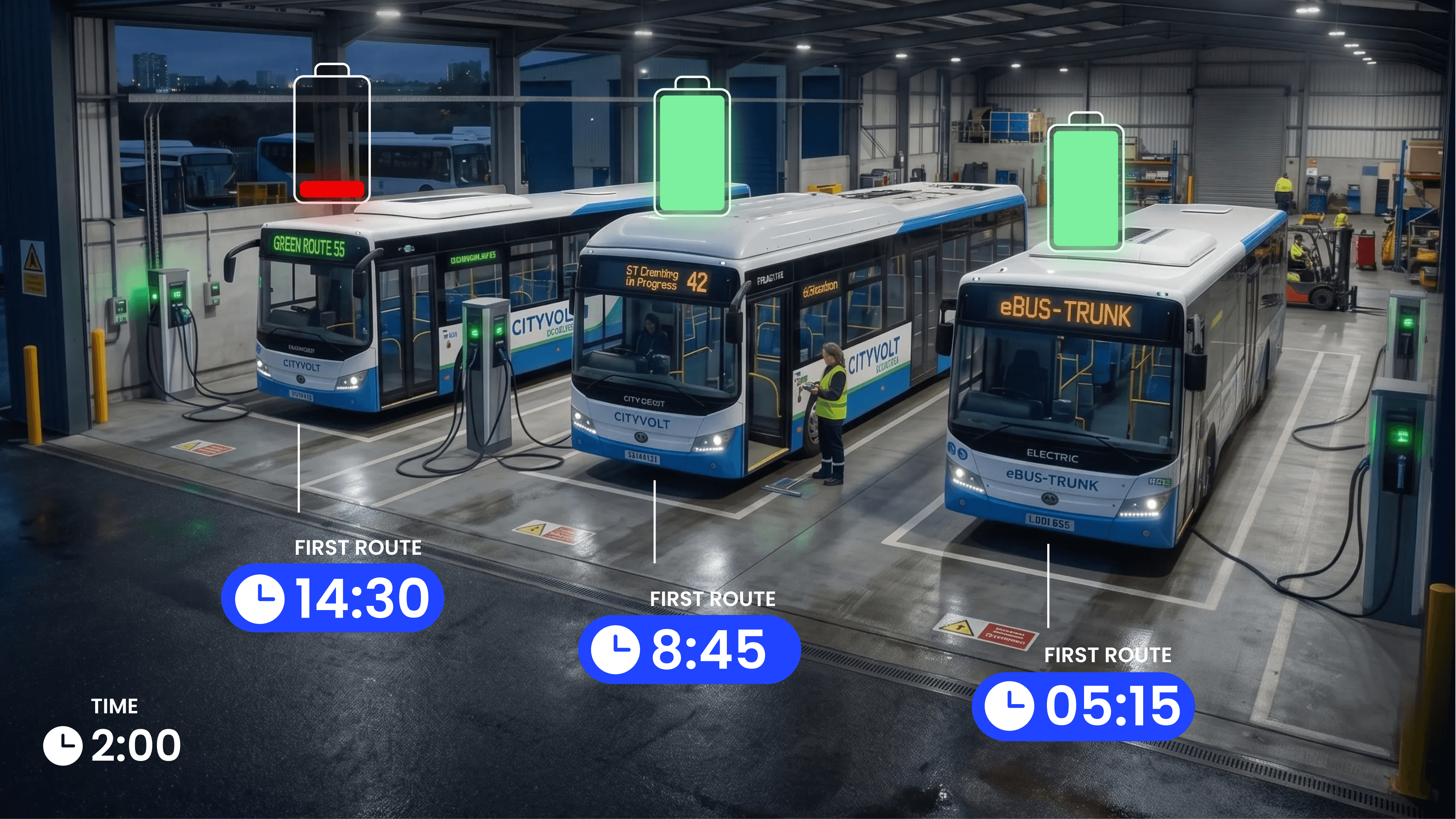
Electrifying a fleet changes more than the fuel. A diesel depot can treat energy as something delivered into the vehicle in a few minutes. An electric depot has to manage power, time and operational deadlines together. Vehicles return at different times. Their state of charge varies. Chargers share a finite grid connection. Some vehicles leave again before others. Energy prices may vary. Solar and battery storage may sit behind the same meter. A fault at 02:00 can become a missed pull-out at 05:00.
That is the operating environment Optimo was built for. Optimo is the Fleet Energy Operating System for electric fleets. We connect vehicles, charging infrastructure, depot energy and energy markets in one operating environment so that fleets can remain ready for service while getting more value from the infrastructure they already own. The logic is deliberately simple. First, protect the vehicles. A fleet operator does not ultimately care about charging sessions. It cares about service.
A bus must make its pull-out. An HGV must complete its route. A van has to start its delivery round. Optimo therefore works backwards from the operational requirement. It uses vehicle and route context to understand which vehicles need energy, how much they need and when they need it. Then we control the energy.
At depot scale, the theoretical demand of the charging estate can be much larger than the grid connection. The answer is not necessarily to reinforce the grid until both numbers match. The answer is to understand when power is actually required.
Optimo dynamically in real life allocates available site capacity across the vehicles that need it most. As priorities change, the allocation changes with them. This is where the depot starts behaving as one energy system rather than a collection of independent chargers.
The same operating environment can incorporate solar, battery storage, multiple points of connection, site loads, electricity pricing and other energy assets. Then, and only then, comes the upside. A vehicle may be parked for eight hours but only need three hours of charging. The difference creates a window in which demand can move without affecting the next duty. Across a large fleet, those windows can add up to megawatts of controllable load.
That flexibility can be used to reduce cost, manage site constraints and, where market and technical requirements are met, create revenue from energy-system participation. But flexibility never gets to overrule the operation. If the vehicle needs the energy, it charges.
That principle is what separates the Optimo proposition from energy optimisation for its own sake. The result is a platform designed specifically for fleet depots. Not public charging with fleet features added later. Not a standalone energy-management layer that does not understand the vehicles. Not an aggregator making market decisions without operational context. One system connecting the whole chain. For the fleet operator, the complexity should disappear into the background.
The driver should arrive at a ready vehicle. The engineering team should know what needs attention. The energy team should understand what the site is consuming and why. The finance team should see where cost and new value are being created.
And the business should be able to electrify without turning itself into an energy trader or software integrator. That is what we mean by a Fleet Energy Operating System for electric fleets. That is Optimo in one sentence: the Fleet Energy Operating System for electric fleets.


© Copyright Optimo Energy Limited. All Rights Reserved.