
CPMS vs Energy Orchestration: What’s the Difference for an Electric Fleet?
Understand the difference between a CPMS and Fleet Energy Orchestration, and why electric fleets need both charger control and operational context.

Mohomoud Ismail, Global Director of Sales, Optimo Energy
|
mo.ismail@optimoenergy.io
CPMS and Energy Orchestration are often used in the same conversation. They are not the same thing. A Charge Point Management System, or CPMS, is the software layer that connects to and controls charging infrastructure. For a fleet, that foundation is essential.
The CPMS should tell you whether chargers are connected, what sessions are running, how much power is being delivered, what faults are present and whether remote intervention is possible. But a fleet depot has a problem that extends beyond the chargers. The vehicle has a job to do. That is where Energy Orchestration begins. Imagine a depot with 100 charging outlets. The CPMS can see the chargers. Fleet Energy Orchestration needs to understand what sits around them.
Which vehicles are connected? When do they leave? What state of charge do they have? How much energy does the next route require? How much power is available at the grid connection? Is the depot battery charging or discharging? Is solar generating? What is the site load? Can some charging move without affecting operations? Those questions turn charger control into depot control. The distinction matters most when power is constrained.
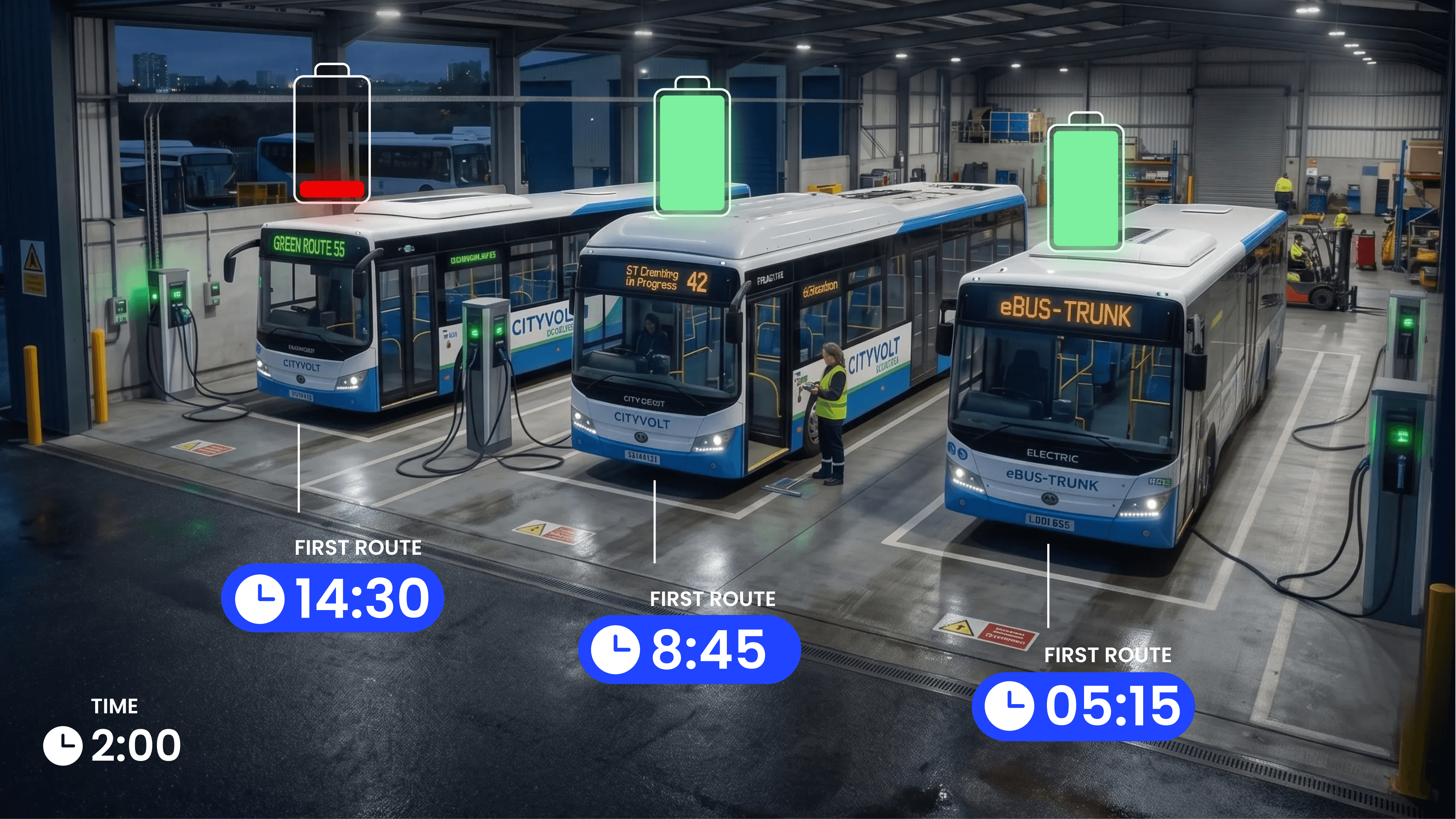
A traditional load-management rule might divide available power equally across connected chargers. That prevents the site from exceeding its limit. But equal is not necessarily intelligent. One vehicle may leave in an hour. Another may remain parked until the afternoon.
Energy Orchestration uses the operational requirement to determine which load is urgent and which is flexible. That is why we describe Optimo as being built on fleet-grade CPMS foundations rather than positioned against CPMS. We need control of the chargers. Then we add the context that makes that control useful to a fleet. Vehicle data. Duty schedules. Departure requirements. Electrical infrastructure. Energy assets. Prices. Market signals. The result is a different question.
A CPMS asks: “What is happening at the charger, and how should I control it?” Fleet Energy Orchestration asks: “What does the entire depot need to do next?” For small charging estates, basic CPMS functionality may be enough. As fleets scale into dozens or hundreds of vehicles and several megawatts of potential demand, the operating environment becomes more complex.
That is when the relationship between charging, operations and energy starts to matter as much as the charger itself. Optimo brings those layers together. The CPMS provides control. Fleet intelligence provides context. Energy Orchestration turns that context into decisions.
And once the fleet’s requirements are protected, flexibility becomes an additional source of value. Not CPMS or Energy Orchestration. CPMS first. Then much more. A CPMS controls charging infrastructure. Fleet Energy Orchestration connects that control to what the vehicles and the depot actually need. Together, that is the foundation of the Fleet Energy Operating System.
The charger is not the end customer. The vehicle operation is. Why the layers must communicate
A CPMS, an energy-management system and a flexibility service cannot make reliable fleet-wide decisions if each works from a different picture of vehicle demand and electrical headroom. The interfaces between them need clear ownership, current telemetry, safe operating limits and a way to withdraw flexibility when fleet requirements change. Integration quality matters as much as the individual products.


© Copyright Optimo Energy Limited. All Rights Reserved.