
Dynamic Load Management for EV Fleets: How to Charge More Vehicles With Limited Grid Capacity
See how dynamic load management helps electric fleets charge more vehicles within grid, transformer and operational constraints.

Mohomoud Ismail, Global Director of Sales, Optimo Energy
|
mo.ismail@optimoenergy.io
A fleet depot can run out of usable power long before it runs out of chargers. That is the problem dynamic load management is designed to solve. The simple version is familiar: keep the charging estate below the site's grid limit. The real version is more complicated.
A live depot can have a site import limit, several transformers, individual feeder limits, changing building demand and hundreds of vehicles all asking for energy at once. The platform has to respect all of those constraints at the same time. And it still has to get the vehicles out in the morning.
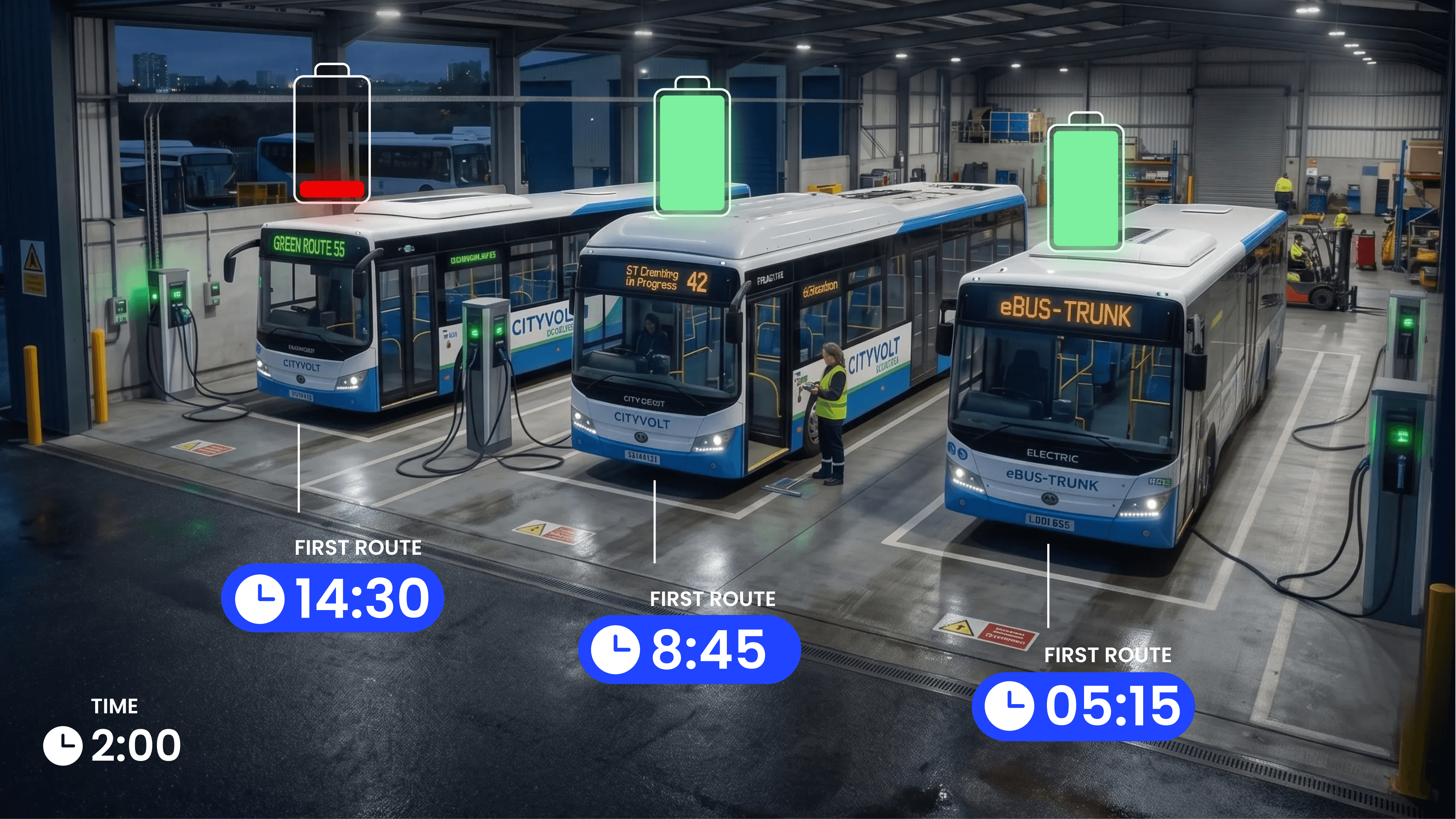
That is why fleet load management cannot just be a fixed cap applied evenly across every charger. Imagine ten vehicles connected behind one transformer. Five leave before 05:00. Five are not needed until later in the morning. If every vehicle receives the same share of power, the electrical limit may be protected while the operation is not. Dynamic load management has to understand both. The electrical hierarchy tells Optimo how much power is safe to use. The fleet hierarchy tells Optimo where that power should go.
The platform continuously monitors the available capacity and reallocates charging as conditions change. A high-priority vehicle can receive more power. A vehicle with spare dwell can temporarily receive less. As vehicles finish charging, their power can be released to others.
If building load rises, charging can reduce before a site or transformer limit is breached. This becomes particularly important in depots with several layers of constraint. At Warrington's Own Buses, the charging system has to respect four transformer limits, timed grid windows and changing building load. The control problem is not simply one number at the front gate.
At Lothian's Central Depot, Optimo distributes charging dynamically across three transformer circuits while protecting departure order. At First Bus Caledonia Road, the principle scales further: up to 12MW of potential charging demand behind a 5MW grid connection. These are different sites, but they show the same thing. Installed charger capacity does not need to equal simultaneous grid demand.
What matters is whether the available power can be allocated intelligently enough to meet the duty cycle. That distinction changes infrastructure planning. Without dynamic control, operators may conclude they need more grid capacity because the theoretical demand is high.
With dynamic control, they can model how much simultaneous power the fleet genuinely requires. Sometimes a grid upgrade is still necessary. Software cannot create physical capacity that does not exist. But it can prevent existing capacity being wasted through conservative static limits or poor prioritisation.
That is exactly what happened at Warrington, where improved visibility and control helped increase available charging power from 3.5MW to 4.3MW on the same grid connection and hardware. Dynamic load management is therefore not simply about preventing a breaker trip. For an electric fleet, it is about using every available kilowatt where it creates the most operational value. Stay inside the electrical limits. Prioritise the right vehicles. Continuously adapt as the depot changes.
That is how more vehicles can be supported with the power already available. Dynamic load management is ultimately about getting more from the infrastructure you already own, without asking the fleet to compromise its operation.


© Copyright Optimo Energy Limited. All Rights Reserved.